What Is OpenClaw? A Current Guide to Its Gateway, Agents, and Data Path
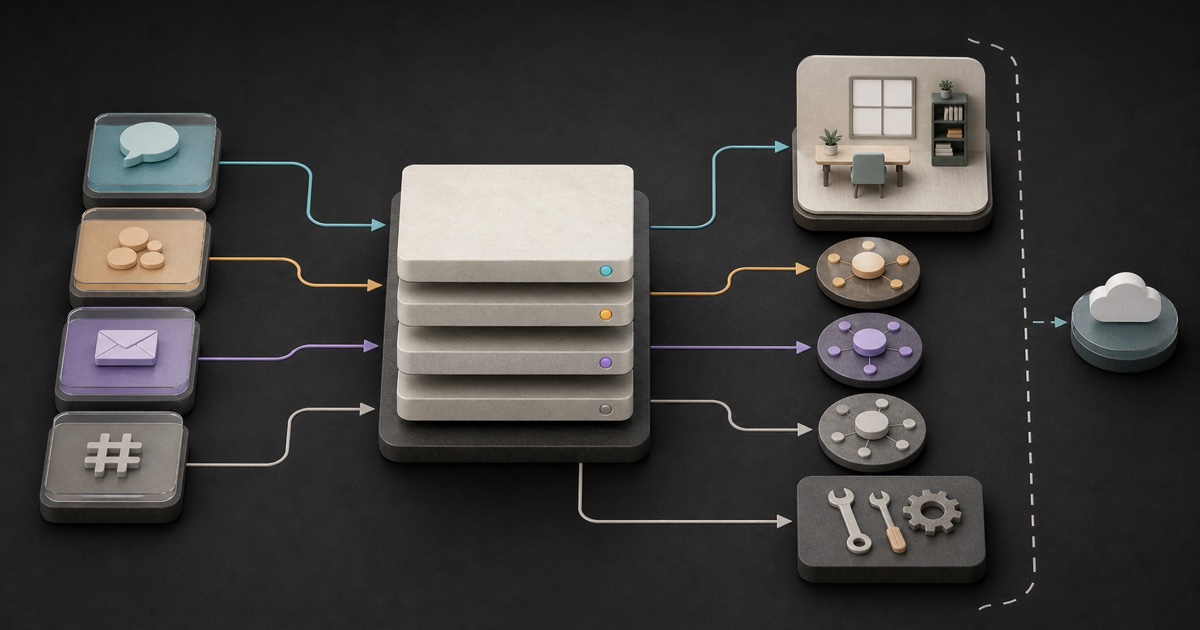
Quick answer: OpenClaw is a personal AI assistant platform you run on your own device or server. Its always-on Gateway connects messaging channels to stateful agent sessions, workspaces, models, tools, skills, and plugins. It is model-agnostic and can use local or remote providers. Self-hosted state does not mean every message stays local: channel providers, remote models, embedding or memory-search providers, and network tools can each receive data.
This description reflects official OpenClaw documentation checked on July 24, 2026.
Key facts
- The Gateway is the control plane and single source of truth for sessions, routing, and channel connections; it coordinates the configured agent runtime.
- Users can interact through connected messaging channels and other supported clients.
- Agents can have separate workspaces, authentication, routing, and configuration.
- Tools provide operations; skills provide reusable guidance; plugins extend the runtime.
- Privacy depends on the complete path through channels, models, embedding or memory-search providers, tools, logs, and configuration.
How OpenClaw is organized
| Layer | Role |
|---|---|
| Channels and clients | Carry user messages and returned results |
| Gateway | Coordinates connections, sessions, routing, configuration, and agent runtime |
| Agents and workspaces | Hold scoped state, files, instructions, and identity for different assistant roles |
| Model providers | Supply model inference through configured local or remote backends |
| Tools | Let agents act through the filesystem, browser, commands, messaging, or other capabilities |
| Skills and plugins | Package reusable procedure or runtime extensions |
The Gateway is more than a chat relay. It keeps stateful sessions and connects model-guided work to tools and channels under configuration.
Illustrative example: compare supplier quotes from Telegram
This is a synthetic scenario, not an OpenClaw benchmark or customer result.
A user sends a Telegram message: “Compare the three supplier quotes in my downloads folder and return a table.” The path might be:
- Telegram stores and delivers the channel message.
- The local OpenClaw Gateway routes it to a configured agent session.
- The agent reads only the workspace or files its tools can access.
- A configured local or remote model helps extract and compare the quotes.
- Tools create a table in the workspace.
- The Gateway sends the result back through Telegram.
Calling the Gateway “local” does not erase steps 1 or 6. If a remote model is selected, relevant prompt and document content may also cross that provider boundary. The exact data path depends on configuration.
What OpenClaw is useful for
OpenClaw fits persistent, channel-first personal automation: handling requests from messaging apps, operating across devices, retaining assistant state, using tools, and routing tasks to configured agents.
It can suit technically comfortable users who want to operate their own Gateway and choose models, connections, and extensions. Separate agent workspaces and routing can help distinguish roles or channels.
What OpenClaw is not
OpenClaw is not a model. It orchestrates models and tools. It is not automatically local-only: remote model providers and connected services are supported. It is not automatically private or safe because it is self-hosted. Tool permissions, channel exposure, network services, credentials, updates, and logs still need careful operation.
It is also broader than a coding agent, even though coding agents and command tools may participate in its workflows.
Local state vs local-only execution
Ask six questions:
- Where does the Gateway run?
- Which channel provider can see the traffic?
- Is the selected model local or remote?
- Which embedding or memory-search provider is configured, and what text is sent to it?
- Which tools can reach files, commands, browsers, and network services?
- Where do session data, logs, generated files, and credentials persist?
For a local-only requirement, test with network access blocked and verify that the core workflow still works. Use local memory search as well as a local chat model; a remote embedding provider is another data exit. Configuration claims should be backed by observed traffic and failure behavior.
Operational and security tradeoffs
Running the Gateway transfers responsibility for installation, updates, secrets, access control, backups, network exposure, and recovery to the operator. A powerful personal agent may inherit broad access to files, shell commands, browsers, and channels.
Use separate identities and workspaces where appropriate, minimize tool scope, protect Gateway access, review side effects, and avoid assuming that a message from a connected channel is trusted merely because it arrived. Product details and extension behavior change; inspect the current official documentation for the exact version.
OpenClaw and Agenaxy solve adjacent problems
OpenClaw is oriented around an always-on personal assistant Gateway and communication channels. Agenaxy is oriented around a local-first Space in which files, rules, memory, model preferences, permissions, execution evidence, and artifacts form a durable body of work.
A user may prefer channel-first assistance, artifact-first project work, or a composition of the two. The important distinction is the primary control surface and data boundary, not which product is “more agentic.” Compare that data boundary with a local-first AI agent workbench or review the underlying AI agent definition.
Compare one channel-first workflow
Describe a persistent assistant task and the artifact you ultimately need in an Agenaxy beta request. Do not submit confidential documents, customer records, credentials, or production data.
FAQ
Is OpenClaw open source?
The official project describes OpenClaw as open source. Verify the current repository and license for the version and components you plan to use; plugins and connected services may have separate terms.
Does OpenClaw work with local models?
Yes, its model-agnostic architecture can use configured local providers. It also supports remote providers, so the selected model determines part of the data path.
Is OpenClaw the same as a coding agent?
No. It is a broader personal-assistant gateway. Coding tools or agents can participate, but the core architecture also covers channels, sessions, routing, and general tools.
Sources and Fact-Checking Notes
- OpenClaw FAQ describes the Gateway, local state, model providers, messaging channels, memory-search providers, and data-path caveats.
- OpenClaw overview describes the Gateway as the control plane and source of truth for sessions, routing, and channel connections.
- OpenClaw Agents CLI documents agent workspaces, authentication, and routing.
- OpenClaw Tools documents the current tool system and tool policy.
- OpenClaw 2026.7.1 release notes is included to date the product snapshot; this article avoids relying on volatile feature counts.
- OpenClaw product claims were checked against official documentation on 2026-07-24.
- Agenaxy statements are checked against its local-first, Space, Vault, model, permission, and Artifact canon.