OpenClaw vs Claude Code: Personal Assistant Gateway or Coding Agent?
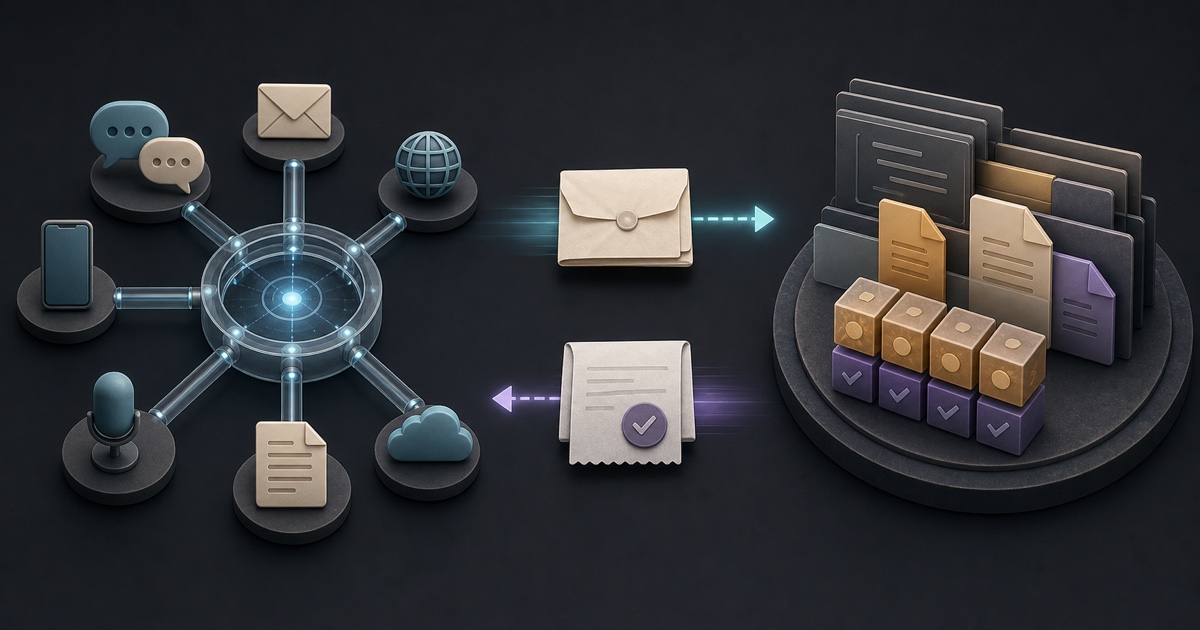
Quick answer: Choose OpenClaw when the primary job is a self-hosted, general personal assistant Gateway routing stateful work across messaging channels, tools, and models. Choose Claude Code when the primary job is software development centered on repositories—even when requests arrive through Slack, Channels, scheduled or event-driven Routines, web, mobile, or Remote Control. Use both only when general personal coordination and repository execution remain genuinely separate roles with explicit identities, permissions, handoffs, and receipts.
Neither is a drop-in replacement for the other. Both products change quickly; this comparison uses official documentation checked on July 24, 2026.
Key facts
- OpenClaw's core control surface is its self-hosted Gateway and connected channels.
- Claude Code's core work surface is a repository, reached through terminal, IDE, desktop, web/mobile, Slack, Channels, Routines, or Remote Control.
- Both can work with files, tools, MCP connections, and reusable skills.
- OpenClaw can participate in coding workflows; Claude Code can automate beyond a single code edit.
- Composition adds another permission and failure boundary rather than removing one.
OpenClaw vs Claude Code
| Dimension | OpenClaw | Claude Code |
|---|---|---|
| Primary job | Persistent personal assistance and channel coordination | Agentic software development in and around repositories |
| Main control surface | Self-hosted Gateway plus messaging channels and clients | Terminal, IDE, desktop, web/mobile, Slack, Channels, Routines, and Remote Control |
| State | Stateful sessions routed through the Gateway | Coding session context grounded in the repository and configured environment |
| Tools | General assistant tools, channels, commands, browser, and extensions | File edits, commands, tests, web and development tooling |
| Models | Model-agnostic configured local or remote providers | Anthropic's Claude models through supported Claude Code access |
| Operations | User operates the Gateway, channels, credentials, and extensions | User configures project permissions, hooks, MCP, skills, and execution environment |
| Best fit | Requests that originate across channels and devices | Tasks whose main source of truth is code and repository state |
The table describes current product orientation, not a hard capability wall.
Illustrative example: issue to fix to Slack
This is a synthetic workflow, not a benchmark or customer result. The task is: watch for a labeled repository issue, implement the fix, run the relevant tests, and post a concise result to Slack.
Claude Code alone can receive the issue through its documented Slack path, a Channel, or a Routine triggered by schedule, API, or GitHub event. It can inspect the repository, change files, run tests, and return the result through the configured surface. For a repository-centered workflow, this may cover the whole task without OpenClaw.
OpenClaw alone can receive a channel request, maintain persistent coordination, call configured coding and command tools, and return results through Slack. Repository-depth, test control, and developer review depend on the coding tool or agent connected to that workflow.
Together, OpenClaw can own broader personal-assistant coordination across non-development work, devices, and tools while Claude Code owns repository implementation. This composition is useful only when OpenClaw's general Gateway state is independently needed; Claude Code does not require it merely to receive a channel or event trigger. The handoff should contain the repository, issue ID, acceptance checks, permitted branch or worktree, and return schema. The result should contain changed files, tests, unresolved risks, and a commit or patch reference—not merely “fixed.”
When to choose OpenClaw
OpenClaw is the stronger fit when requests arrive through messaging channels, the assistant must remain available across devices, sessions should persist behind an always-on Gateway, or several personal-assistant roles and tools need routing.
That flexibility carries operating responsibility. Channel providers, remote models, embedding or memory search, network tools, Gateway exposure, credentials, plugins, and logs all affect the data path and risk.
When to choose Claude Code
Claude Code is the stronger fit when the work begins with a codebase and success is observable in files, commands, tests, builds, and version-control state. Its developer surfaces and repository context make it a natural owner for implementation, refactoring, debugging, and code review tasks.
It still needs bounded permissions and verification. A passing model explanation is not a passing test; a changed file is not a correct patch; a command permission is not a security guarantee.
When to use both
Composition makes sense when:
- OpenClaw's persistent channel routing is independently valuable;
- Claude Code's repository execution is independently valuable;
- the boundary between coordination and implementation is explicit;
- each side has a narrow identity and credential set;
- duplicate triggers and retries cannot repeat side effects;
- results cross the boundary as inspectable artifacts or typed receipts.
Avoid giving a channel-facing assistant broad repository and deployment credentials merely to simplify the diagram. A message from an approved channel should not automatically authorize a production change.
Limits of this comparison
Both products add integrations and change behavior quickly. Feature lists, supported surfaces, model access, and product-to-product attachment paths may change after the verification date.
Security also depends more on configuration than category. Compare the exact versions, extensions, model providers, permissions, and deployment you plan to operate.
Where Agenaxy fits
Agenaxy takes a third orientation: a local-first Space where files, rules, memory, model preferences, permissions, sessions, execution evidence, and artifacts form the durable work surface. It is not primarily a messaging Gateway or a repository-only coding tool.
The useful choice may be channel-first coordination, repo-first implementation, Space-first artifact work, or an explicit composition. See what OpenClaw is and compare an agent workbench with workflow automation.
Key takeaways
- OpenClaw is oriented around persistent assistant channels and a self-hosted Gateway.
- Claude Code is oriented around repository-centered software work.
- Capability overlap does not erase the primary-job difference.
- Using both requires a typed handoff, separate permissions, and verifiable receipts.
- Choose the owner of the task's real source of truth.
Map one repo-plus-coordination workflow
Describe the trigger, repository task, expected tests, and notification artifact in an Agenaxy beta request. Do not submit source code, confidential documents, customer records, credentials, or production data.
FAQ
Can OpenClaw run coding agents?
OpenClaw can connect tools and agent workflows that perform coding work. The exact integration, permissions, and supported behavior depend on the current OpenClaw version and the coding tool.
Can Claude Code receive work from messaging channels?
Yes. Current official documentation includes Slack and Channels such as Telegram, Discord, iMessage, and webhooks, plus Routines and Remote Control. Those entry points remain centered on Claude Code's software- development work rather than making it a self-hosted general personal-assistant Gateway.
Is it safer to combine the two?
Not automatically. Composition creates another trust boundary, credential path, and retry surface. It can be safer only when roles and permissions become narrower and the complete path is verified.
Sources and Fact-Checking Notes
- OpenClaw FAQ, Tools, and 2026.7.1 release notes support the current Gateway, provider, tool, and integration description.
- Claude Code Overview, Quickstart, and Skills support the current coding surfaces, Routines, Channels, Slack, Remote Control, and extension model.
- Product claims were checked against official documentation on 2026-07-24. No price, user-count, or benchmark claim is made.
- Agenaxy statements are checked against its local-first, Space, model, permission, Trace, and Artifact canon.